I had been writing down game ideas for a while. Lots of text, cool art, interesting mechanics. Excellent. Very useful. The ideas usually worked until they did not. At some point the parts began to feel attached to one another instead of necessary, and I kept wondering how other games avoided that. I needed some idea of what «Story» and «Meaning» in games are in the first place. One must always understand before practicing. Or at least, I like to. How do good games arrive at something that feels natural and self-sufficient, almost discovered rather than invented?
The smaller story games became especially interesting to me because they make these relations easier to see. A large RPG can distribute its story across a world, a cast, quests, cutscenes, systems, and whatever else it has lying around. A small game may have one central action and somehow make that action carry a relationship, a memory, a moral problem, perhaps most of the game. It is the process through which the story comes into being.
Still at the Table
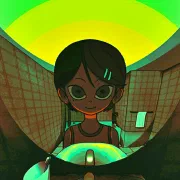
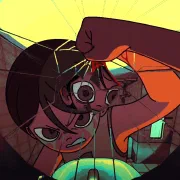
was made for The Very Serious Juniper Dev Game Jam. It is free on itch.io and runs in your browser. You spin a roulette wheel, place bets, lose or win, then spend your winnings on something to say. Your girlfriend is confronting you because you have relapsed, and the only way to answer her is to keep gambling. So you gamble in order to explain why you gambled. You lose, spin again, win a little, buy a sentence. Great voice-over too. There is already a situation around the loop: a room, a relationship, the sense that this conversation has been waiting for you. A few lines and a smooth lo-fi hip-hop beat do plenty of work.
The pressure, however, keeps coming from the same action. Gambling caused the conflict, and gambling now produces the words with which you try to respond to it. The conversation grows through the loop. That is why the game feels complete despite being small. The mechanic has not simply been given a story to wear. It keeps displaying what the story means. We have been made to perform the thing this person cannot stop doing, until we understand who they are. It gives the story and mechanics an alibi, a bulletproof one in this case.
Sisyphe’s Backspace
works differently, though the same relation is there. You write a confession and delete it. The deletion performs the hesitation. The game does not need a separate scene explaining that someone cannot bring themselves to say what they mean. You are already doing it. The mechanics are the story are the gameplay are the design... There is barely any useful distinction between the moving parts. It’s a text box, yes, but it works because of creative decisions and can only work this way. It doesn’t want to be more than a text box.
Am I Nima (demo)
does something similar with words. Objects become words, words become associations, associations may turn into memories, and those memories begin shaping identity and speech. The word system is not just a translation mechanism for story. Handling the words is how the story becomes possible. And we’re shaping it. After all, we’re controlling a brain.
Papers, Please
makes you do paperwork. You inspect documents, compare dates, look at photographs and seals, and decide who may pass. At first the work is administrative because, well, it is. Then the people on the other side of the window begin giving the work weight. A wrong stamp means someone gets through, gets sent back, loses something, perhaps disappears. The job keeps producing responsibility. It may not generate a large conventional plot every time you compare two dates, but it generates pressure, guilt, suspicion, and moral consequence. It accumulates story, creates meaning. Story can mean events, certainly, but it can also mean identity, memory, tension, interpretation, or the feeling that an action now belongs to you. There’s also an official short film of Papers, Please on YouTube.
Floating and embodied concepts and stories
After looking at games like these, I began to notice two directions. Sometimes the player is placed inside a story, world, character, or condition that already surrounds the action. What you do gains meaning from what is already there. Classical RPGs do this. At other times, playing begins to generate the story or meaning itself. The action produces pressure, memory, consequence, identity, or interpretation as it unfolds.
Are you placed inside a story, or does playing generate the story?
I started calling the first direction floating and the second embodied. They are working terms. Most games use both. One direction usually leads while the other extends it, supports it, or gives it context. Citizen Sleeper floats heavily. Before you know every system, the game has already placed you inside a life. Gentle science fiction. An artificial body. Lots of talking. Survival. Existential pressure and melancholy. The condition surrounds almost everything you do. You arrive inside a world, a history, and a problem, and the actions draw their pressure from that larger situation. The premise and atmosphere of this game make or break it.
Disco Elysium
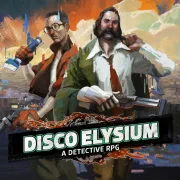
moves in the same direction on a much larger scale. The city, its politics, the failed revolution, the ruined protagonist, the corpse outside, the hangover, the fragments of history lying around everywhere—all of it is there before you have managed to find both shoes. The world gives the actions meaning. Still, the game goes unusually far in pulling that floating material into its systems. To integrate the story, to try and embody it. People may describe its UI as evocative, original, or perfectly suited to the world. True. But the larger pattern is that the interface, writing, art, mechanics, and subjectivity keep behaving like parts of the same experience. The skill screen visualizes the protagonist’s mind, then the skills begin speaking. They interrupt, argue, flatter him, misread situations, notice things, panic, and occasionally become far too certain about something stupid. Harry’s psyche does not remain on the character sheet. It participates in play. That helped me separate a few things I had treated as one. A menu can visually fit the world. It can use the right colors, shapes, sounds, and language. It can also represent something inside the world: a notebook, a device, a map, a person’s thoughts. That’s already a form of integration.
And then, it can go further and actively participate in what the game means. Disco Elysium lets its systems participate. The interface not only shows us a fractured mind; it allows that mind to shape what the player notices and how situations are understood. A largely floating game can embody parts of itself. This is also why abstraction is not the opposite of embodiment.
Falling from the clouds
Most games want story, atmosphere or meaning nowadays. Beyond gameplay and graphics. Basically, stylized art or text. We can see how floating games, especially RPGs, are designed inward: There’s an idea that needs a vessel. A story that looks for a game system that can house it.
Embodied games are often designed outward: A mechanic, a certain action, or an event is the game’s core. Then, in the best cases, there’s a way to let that core naturally generate or inhabit story. What strong game designs, be they floating or embodied, often share is that they go to great lengths to make the whole thing feel coherent and inevitable, as if the idea fell from the sky.
The good old
classical strategy and war games may remain openly systemic. Menus, icons, units, reports, numbers. Fine. They do not need to pretend the lieutenant personally drags every soldier across the map with both hands.
But Frostpunk
is an abstract management game too. You allocate resources, pass laws, read reports, and watch values rise and fall. But those values keep returning as people. A shortage becomes freezing children. A decision may come back as illness, unrest, obedience, or death. The system remains visible, yet the consequences become concrete. The abstractions keep turning into story. The game was received very well and I believe its commitment to thematic integration played a big role in that.
Board game
players already talk about something close to this when they discuss thematic integration. Sometimes the components and mechanics represent the theme in a loose, abstract way. “Here are some plastic soldiers. They resemble soldiers. War has been achieved.”
Other board games tie their theme directly to the mechanics and components, with everything designed and worded very intentionally. Is this just a bunch of plastic, or does it feel like it belongs? Do the actions I take each turn fit the identity of the game?
Digital games can do this through mechanics, writing, art, pacing, sound, UI, or the way consequences return. Those parts may share a visual identity and still feel loosely assembled. Or they may keep passing meaning between one another until it becomes difficult to say where the story ends and the system begins.
Smaller games
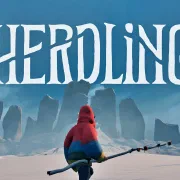
often make that density obvious because one action has to carry almost everything at once. Mechanics, interface, story, atmosphere, meaning. There is less room for the parts to wander off and develop separate hobbies. That does not make small embodied games better than RPGs. RPGs offer scale, history, characters, exploration, and complexity that a ten-minute browser game is not trying to provide. The smaller games simply give us a clear view of what near-total integration can look like. Medium titles like Far: Lone Sails or Herdling excel at this too.
Larger games
became easier to examine in the same way. After all, doing the thinking seems to pay off yet again.
How much of the world enters the mechanics? How much of the character enters the interface? When the player acts, does the game answer in a form that belongs to its subject? How much of what the game claims to care about returns as consequence?
And yet—
any game can be deliberately dissonant, excessive, modular, or mechanically detached from its story and still be effective. Sometimes friction between form and content is itself expressive.
Is every game an RPG now?
People now attach text boxes and existential struggle to almost anything, be it a pinball game or a writing simulator. I am sure versions of both exist. Why? Because stories are awesome. Not all of them. And not every game should have one. But still. And genre labels still help. “Roguelike” and “visual novel” describe fairly recognizable forms. “RPG, story-driven, atmospheric, resource management, horror, story rich” can all be accurate too. They tell us about conventions, expectations, and perhaps the shelves on which a game would prefer to be found. But they do not always tell us how the story, mechanics, UI, and attention are connected inside that particular game.
Is there a point?
Papers, Please, Disco Elysium, Frostpunk, Citizen Sleeper, The Pale Beyond, Am I Nima—they can all be looked at through the same questions despite being very different games.
What does the player do? Where does the story already exist? What begins to emerge from the action? How does the game answer what the player has done? How much of the meaning has entered the mechanics and the UI?
Sometimes meaning already surrounds the player and gives the actions weight. Sometimes the actions begin producing that weight themselves. Most games move in both directions, and much of their character seems to come from how tightly those movements remain connected. How deliberate the creative direction is, whether the game tries to embody its moving parts or not.
It changed the way I thought about making a story game. It no longer seemed to imply making an RPG, a visual novel, or any other familiar container. There’s story in paperwork, roulette, deletion, resource allocation, a text box, a word association, perhaps pinball after all. Almost any form can carry it when the action, interface, and consequences give it a natural place to exist.
To me, what remains is: mechanics, story, interface, atmosphere, and consequence must strive to feel necessary to one another rather than assembled. And if they don’t, there should be a good reason for that.